Replicant — Brand System & Marketing Asset Rebuild

Context

Replicant is a conversational AI platform operating in a highly technical, enterprise-focused space. As the company scaled its marketing and sales efforts, its visual identity and supporting assets lacked cohesion — making it difficult to present a clear, confident brand to both internal teams and external audiences.

Challenge

The primary challenge was to evolve Replicant’s brand into a more unified, scalable system that could support a wide range of use cases — including sales collateral and internal documentation — while maintaining clarity in a complex product space.

Role & Collaboration

I worked as a core design partner alongside a senior designer acting as Creative Director. While high-level brand direction was shaped collaboratively, I focused on translating that direction into execution — scaling the system across marketing, sales, and internal touchpoints. My role emphasized consistency, usability, and adaptability across formats.

Strategy

Our approach centered on building a flexible visual system that could:

  • Scale across multiple touchpoints without losing clarity

  • Support both brand storytelling and functional communication

  • Improve internal alignment and ease of use for teams creating new assets

This required thinking beyond individual deliverables and prioritizing repeatable patterns, modular components, and clear hierarchy.

Execution

I contributed to the execution of a large-scale rebrand that included:

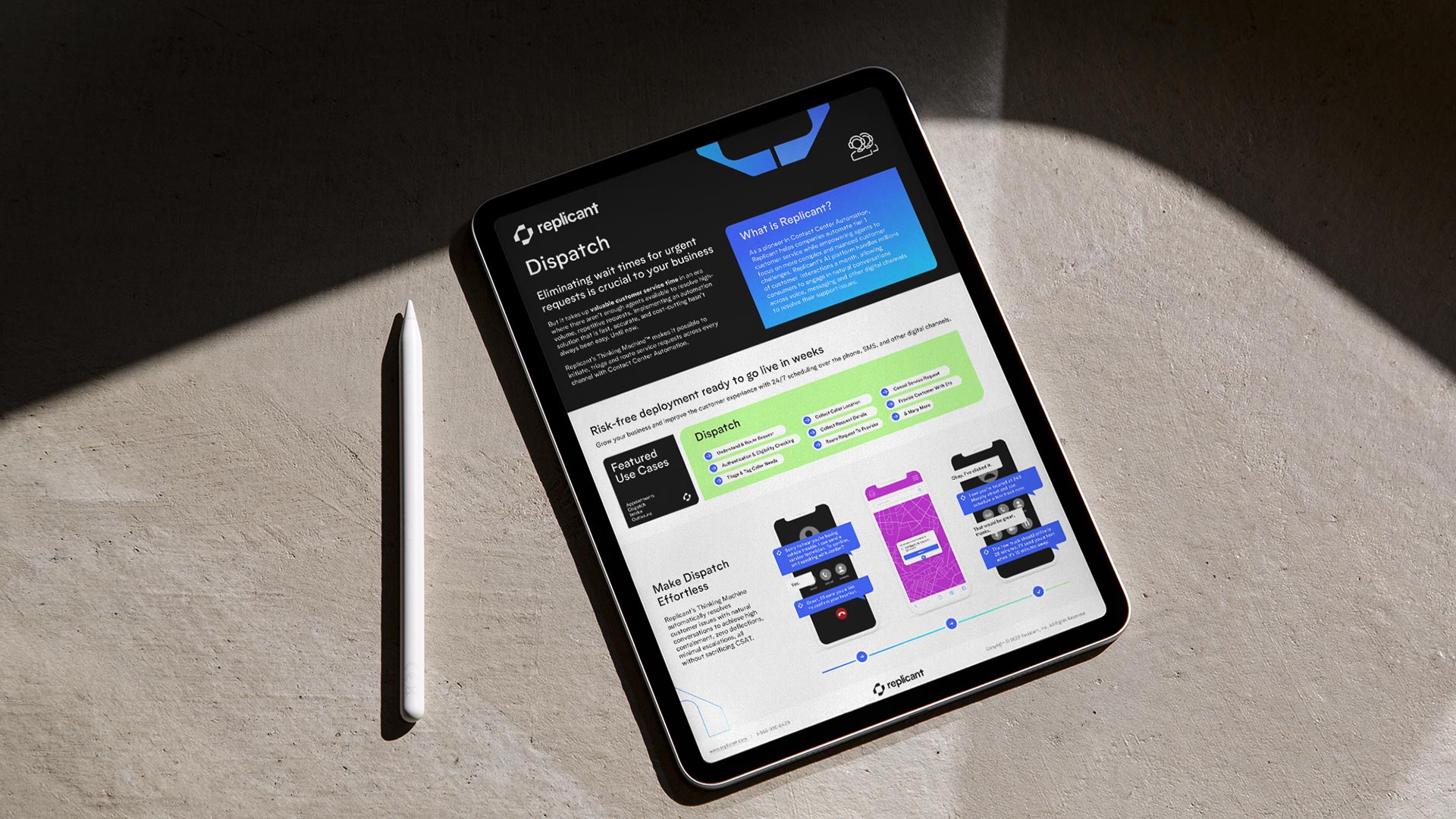
  • Sales and B2B collateral

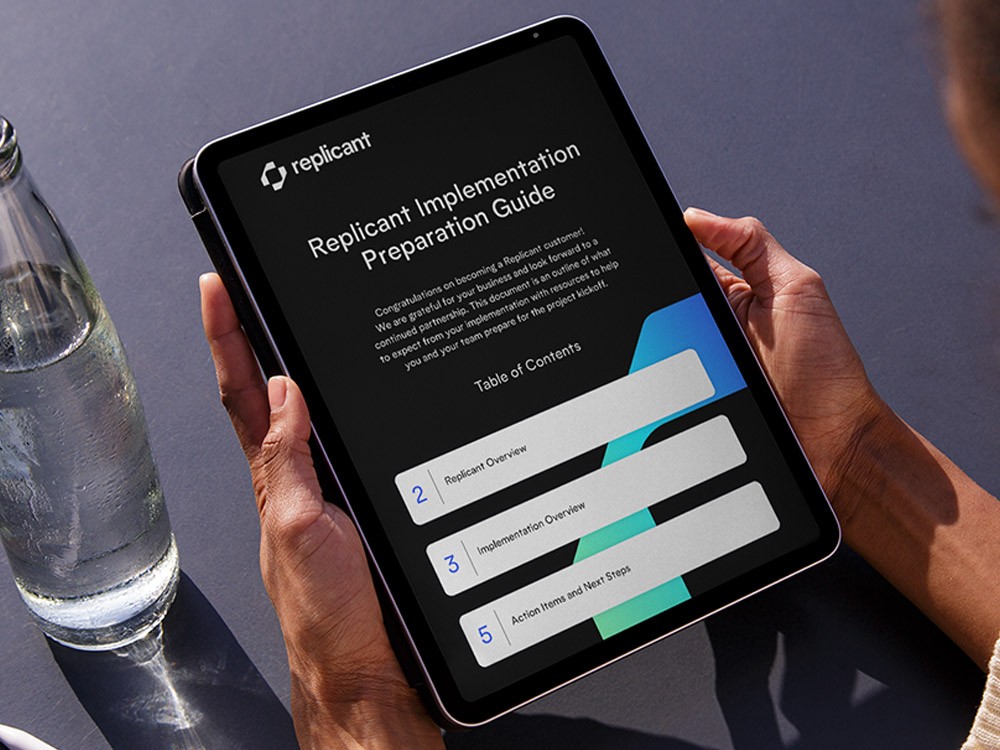
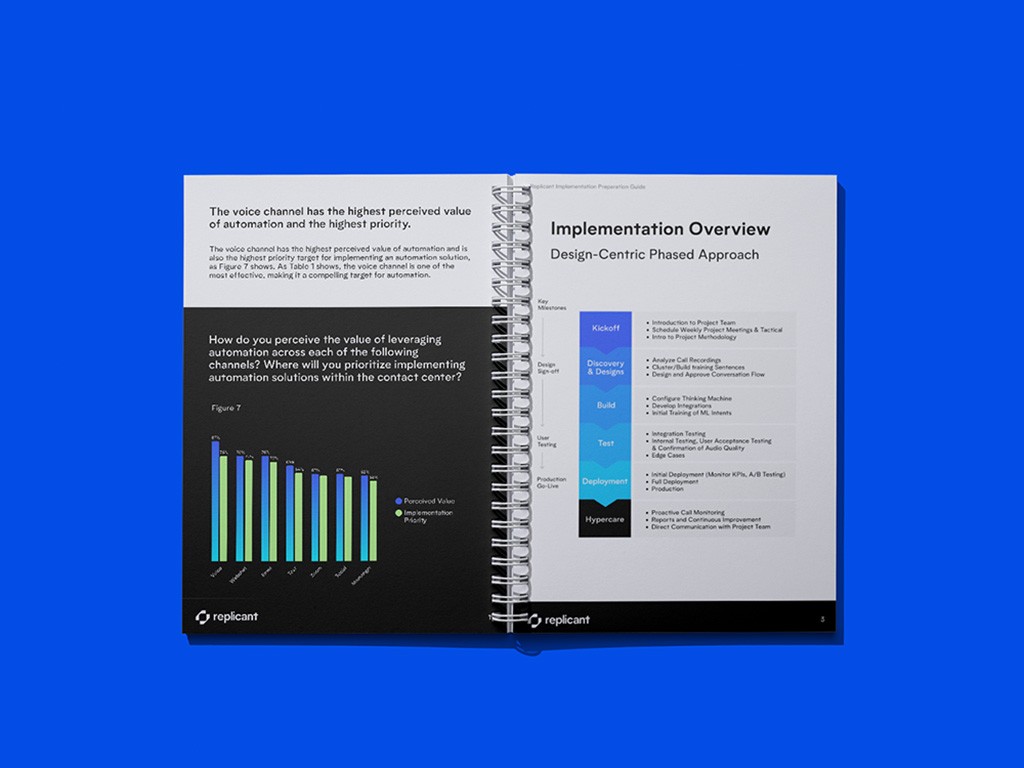
  • Internal brand documentation and templates

  • Custom iconography and supporting visual elements

A significant focus was placed on how color, typography, and layout could be used consistently across contexts — ensuring the system felt cohesive whether applied to a single asset or a multi-page document.

Impact & Outcomes

While direct performance metrics were not owned by design, the rebrand resulted in:

  • A unified visual language adopted across multiple teams

  • Increased internal clarity around brand usage and hierarchy

  • Faster asset creation through reusable templates and systems

  • A more confident, enterprise-ready brand presence

The updated system provided a foundation that enabled Replicant’s teams to operate more efficiently and consistently.

Reflection

This project reinforced the importance of balancing creative direction with practical execution — operating collaboratively while independently owning system-level thinking. It remains one of the strongest examples of the brand and systems work I aim to continue doing at a senior level.

Infographic by Replicant highlighting customer service challenges in the insurance industry. Key issues include call volume spikes, increasing costs, and unpredictable demand. Features a case study of an auto insurance company improving call handling with Replicant's voice solution, resulting in 50% more calls answered. Includes charts and graphics illustrating the benefits of automation, such as reduced costs and improved customer experience through phone, SMS, and chat solutions.
Infographic on the impact of the Great Resignation on contact centers, highlighting 10 data points. Key themes include increased employee burnout, reluctance of remote employees to return to offices, record resignation levels, call center agent stress, disengaged employee costs, ineffectiveness of traditional solutions, talent pool shifts, and rising call volumes. It also discusses accelerated automation plans and the competitive advantage of early AI adoption in business. Source: Replicant.
Grid of turquoise line icons on a black background, including symbols for finance, charts, calendars, settings, and communication.
Bar chart titled "Biggest barriers to automation in contact centers." Categories: Cost/Budget Constraints (49%), Limited IT Resources (40%), Lack of Leadership Buy-In (32%), Desire to Build In-House vs. Vendor (24%), Unsure How to Get Started (23%), Too Complex (23%), Lack of Skills/Team (21%), Customer Readiness Skepticism (21%), Perceived Lack of Value (16%), and Technology Skepticism (10%)."